
Terrazzo Tile Sealing
Long-term protection for both the beauty and the structure
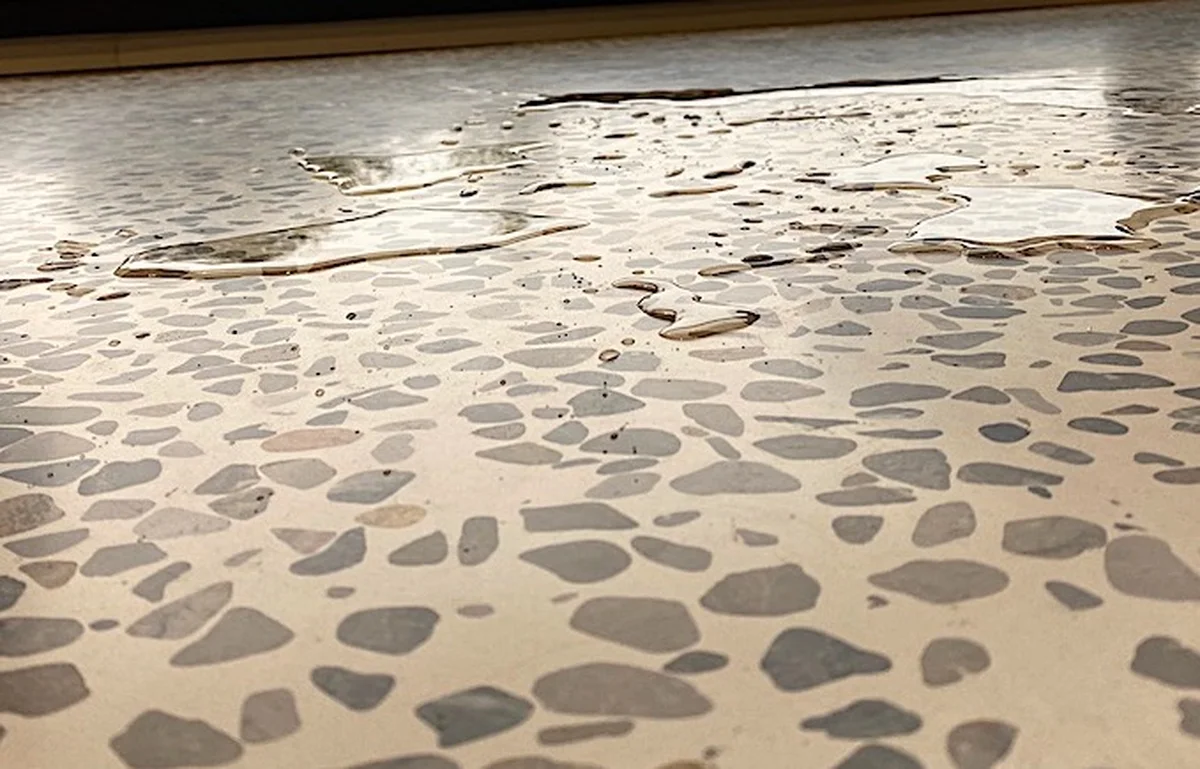
Why does terrazzo tile sealing matter?
Terrazzo is a popular material thanks to its strength, timeless look and long service life. Whether in historic buildings, modern offices or living spaces, terrazzo tiling becomes both an attractive and a functional feature. To stay beautiful and durable for the long term, however, it needs not only regular cleaning and polishing but also proper protection – and this is precisely where sealing plays the key role.
Sealing terrazzo tiling means an invisible protective layer applied to the surface after thorough cleaning or polishing. Its job is to penetrate the structure of the material and create a barrier against water, grease, chemicals, de-icing salt and everyday soiling. A properly chosen sealer does not change the look of the tiling, nor its color or gloss – but it extends its service life and makes day-to-day maintenance easier.
Without sealing, terrazzo stays open to moisture, dirt and aggressive substances that can gradually penetrate deep into the material and cause stains, marks, flaking or mechanical weakening of the surface. Sealing slows this process considerably and so protects not only the look but also the technical stability of the material. Tiling left unsealed for years loses its appearance far faster and requires more costly maintenance.
Sealing also makes everyday cleaning easier – dirt does not penetrate deeply and is easier to wipe away. The surface does not get as dirty, which reduces both the cost and the time spent on routine maintenance. In many cases hygiene improves too, which is particularly important in public and healthcare buildings.
When should terrazzo tiling be sealed?
Sealing is appropriate:
- After cleaning or polishing the floor
- After grinding or restoring terrazzo surfaces
- On completion of newly laid terrazzo
- After removing old protective layers
- As part of regular maintenance every 2–4 years
Sealing works best when the substrate is dry, clean and free of grease or residual chemicals. That is why it is always ideal to precede sealing with expert cleaning or polishing. The surface then absorbs the sealer better and the protective layer lasts longer.
In floors in heavily used spaces such as entrance halls, stairways or public corridors we particularly recommend renewing the sealer regularly. In some cases – in kitchens, restaurants or premises with greasy operations, for example – more frequent application of specialized sealers may be appropriate.
How does sealing work?
- Surface preparation – removing dirt, grease, waxes and the residues of earlier treatments. At this stage thorough machine cleaning is essential to prepare the substrate so the sealer soaks in properly.
- Applying the sealer – it is applied with a roller, mop or spray in an even layer. It is important not to exceed the recommended quantity and to observe the correct dwell time.
- Penetration and drying – the sealer is left to soak in and dry (1–6 hours depending on type). During this time the protective layer forms both inside and on the surface of the tiling.
- Buffing (optional) – any excess product can be machine-buffed for greater gloss and evenness. This stage is recommended mainly in interiors with higher aesthetic demands.
Depending on requirements, various types of sealer can be used – from water-repellent through oil-repellent to so-called hybrid (combined) products. There are also sealers with an anti-slip effect and products based on nanotechnology for extra-high durability. The choice of sealer depends on the particular application, the environment and the expected loading of the surface.
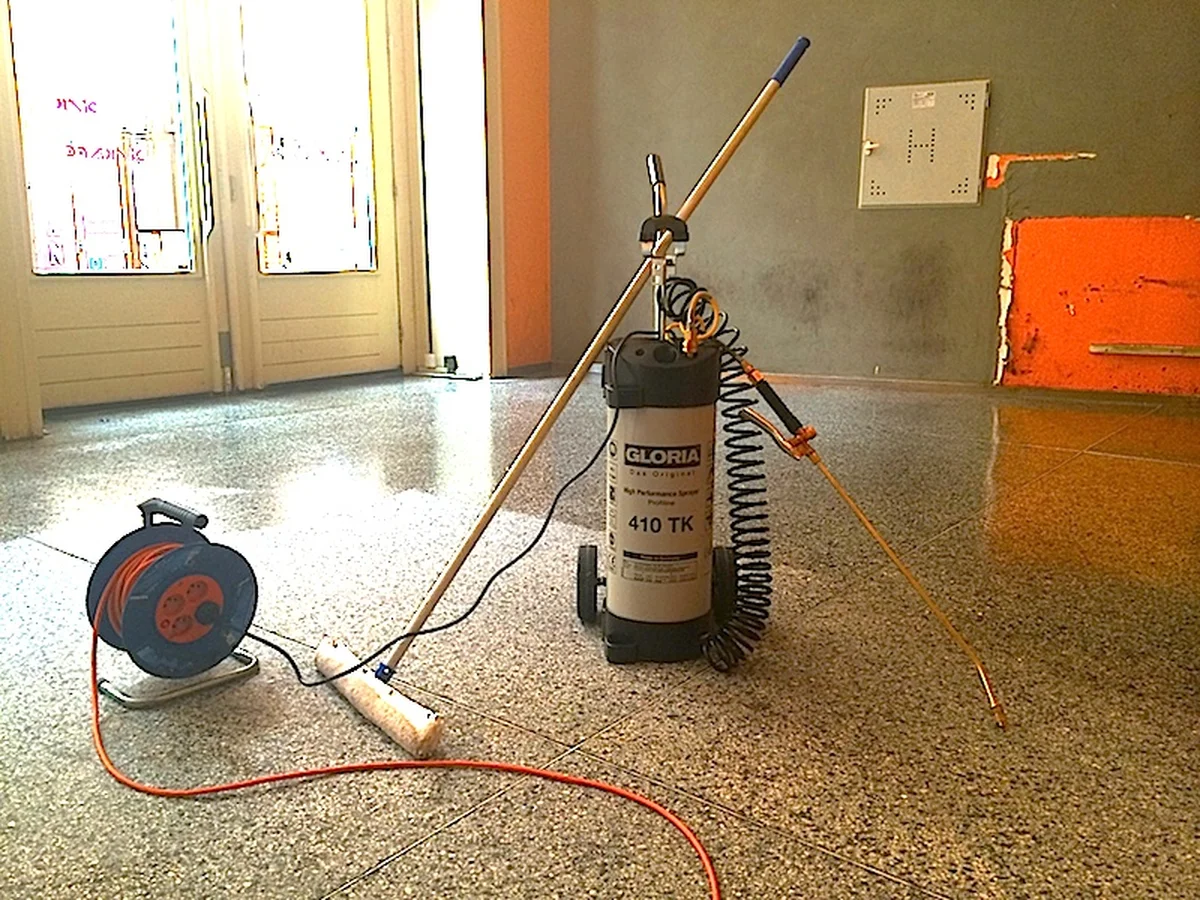
The benefits of terrazzo tile sealing
- Invisible yet effective protection
- Resistance to moisture, grease and chemicals
- Easier, faster maintenance
- Prevents stains, marks and blotches forming
- Preserves the natural look of the material
- A longer service life and less risk of damage
- Reduced absorbency of the terrazzo
- Suitable for busy spaces too
- Lower running costs over the long term
- An environmentally sound solution – no replacement or structural work needed
Which buildings is sealing suitable for?
- Apartment buildings and tenement entrances – protecting floors in entrance halls and corridors against moisture and dirt. Sealed floors are easier to maintain and look better kept.
- Administrative buildings – extending the life of floors in receptions, offices and kitchenettes. Keeping dirt and liquids from penetrating the surface.
- Healthcare facilities and schools – ensuring hygienic conditions and easy cleaning. Sealing prevents staining and makes disinfecting easier.
- Historic buildings and heritage sites – preserving the original appearance with minimal intervention. Special sealers respect the character of old materials.
- Shopping centers and stores – greater resistance to heavy use. The floor keeps its appearance for longer with no frequent repairs.
- Restaurants and hotels – protection against grease, moisture and demanding use. It keeps liquids from penetrating the floor and so prevents hygiene problems.
- Private residences – long-term protection for floors in kitchens, hallways and on terraces. Sealed areas stand up better to water, grease and UV radiation.
- Industrial buildings and warehouses – increased protection in places with extreme loads, where chemical resistance and easy cleaning are essential.
Frequently asked questions (FAQ)
How long does sealing last?
Usually 2–5 years, depending on how heavily the space is used and the type of environment. In extremely demanding spaces we recommend renewing it more often.
Does sealing change the look of the tiling?
No. A quality sealer is invisible – it does not change the color, gloss or texture. With some types a slight enhancement of the coloring is possible.
Is the surface slippery after sealing?
On the contrary – some types of sealer have an anti-slip effect. The surface is safer, particularly in damp environments.
Can sealing be combined with polishing?
Yes. The best results are achieved by combining professional polishing with subsequent sealing. The floor is both beautiful and protected at the same time.
How much does sealing cost?
The price depends on the size of the area, its condition and the type of sealer chosen. We will prepare an individual quote for you after an in-person consultation.
Restore your surface to perfection 🤩
Free initial consultation and a quote within 24 hours 🚀
We handle the restoration, grinding, cleaning and sealing of your floors and terrazzo with an emphasis on quality, detail and long service life.