
Terrazzo Polishing
A luxurious look, a long service life and easy maintenance for any interior
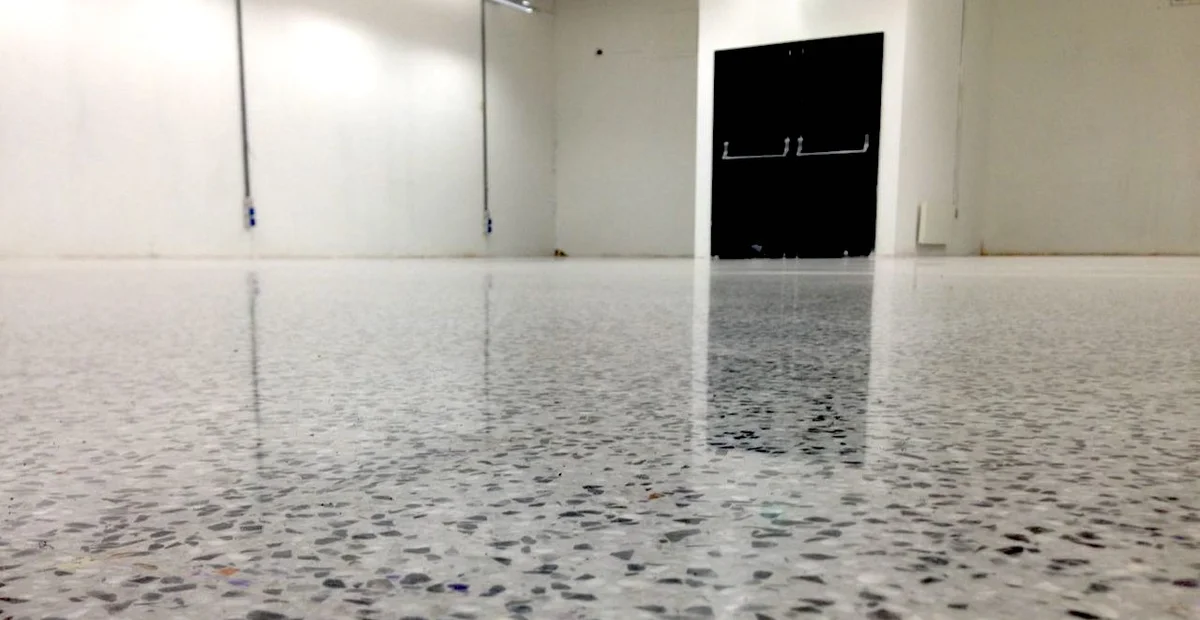
Terrazzo is one of the most durable and at the same time most attractive materials for floors, stairs and cladding. Its history reaches back to antiquity, when it was used as a luxury surface in palaces and public buildings. Today terrazzo is returning to modern architecture and interior design, because it combines the natural beauty of stone aggregate with exceptional durability. To bring out its real beauty, however, the surface has to be finished by a professional. That is exactly what terrazzo polishing is for – the process that gives a floor a perfectly smooth, glossy, representative appearance.
Polished terrazzo is not only an aesthetic choice. It is an investment in the long-term service life of the floor, which the right finish makes easy to maintain and resistant to staining and mechanical loads. A glossy surface also looks luxurious and can underline the character of a space – from modern offices through family homes to historic landmarks.
What is terrazzo polishing?
Polishing is a mechanical surface treatment using special grinders and polishing machines. Step-by-step grinding and polishing removes irregularities, evens out the surface and brings it to a high gloss. The process accentuates the color and structure of the aggregate, so the floor looks livelier and more elegant.
The result is a surface that is not only beautiful but practical as well – it is easy to clean, it resists moisture, and with the right sealer it lasts for decades.
How does terrazzo polishing work?
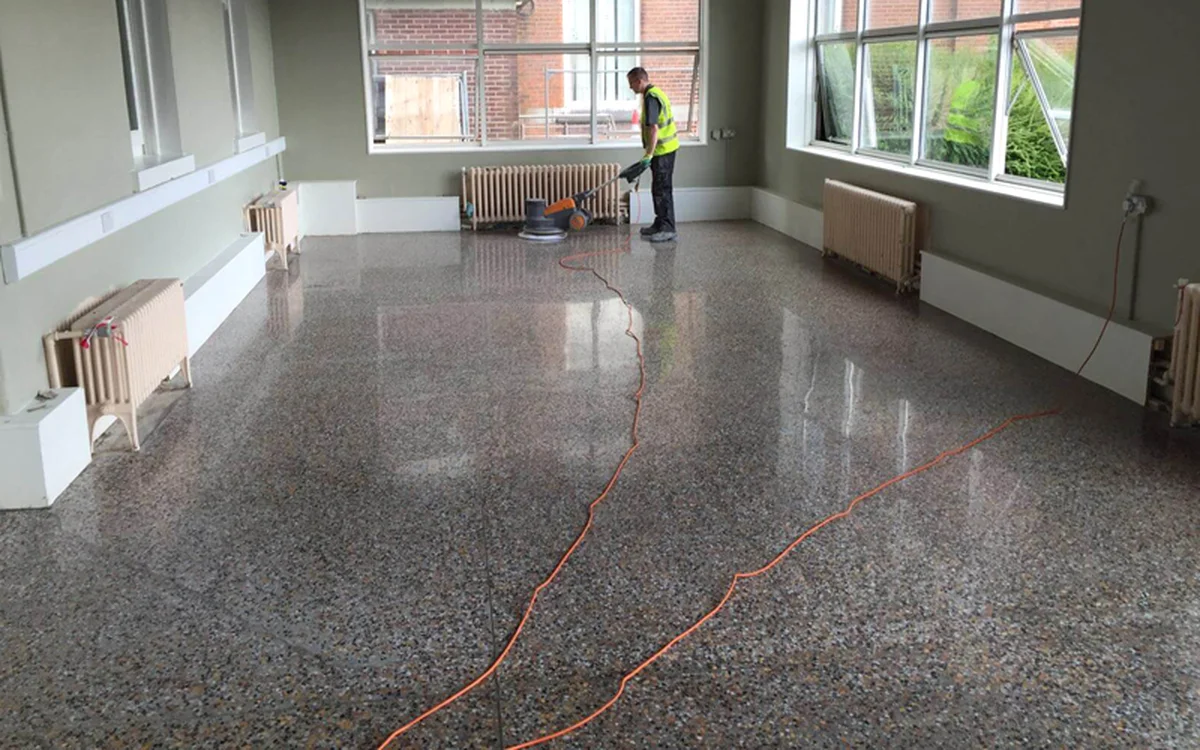
Polishing is a multi-stage process that calls for professional equipment and experience. Every step matters if the result is to be perfect:
1. Preparing the surface
Removing coarse dirt, old coatings and adhesive residue. The surface must be clean, sound and free of cracks.
2. Coarse grinding
Coarser-grit grinding discs remove irregularities and scratches and even out the surface. This step is essential for leveling the floor.
3. Medium grinding
Progressively refining the surface and evening out the color and structure of the aggregate. The surface begins to unify and is prepared for the final finish.
4. Fine grinding and polishing
Special discs and polishing pads give the surface its smoothness and the first hint of gloss.
5. Final polishing
Achieving the high gloss that brings out the color of the aggregate and gives the floor a luxurious look.
6. Sealing and protection
Applying protective products that increase resistance to moisture, staining and chemicals.
The whole process can be carried out on newly poured floors as well as when restoring older terrazzo surfaces. In historic buildings the procedure is adapted so that the original character is not compromised.
Where is polished terrazzo used?
Polished terrazzo is at home anywhere that calls for good looks, a representative appearance and a long service life.
- Entrance halls and receptions – first impressions count. Glossy terrazzo looks elegant and representative, which companies and institutions appreciate.
- Showrooms, galleries, museums – accentuating the design, the color and the artistic character of a space. A glossy surface sets off the exhibits or products on display.
- Hotels, restaurants, wellness facilities – a luxurious atmosphere, easy maintenance and resistance to spilled liquids. Guests appreciate the clean, elegant look.
- Apartment buildings and family homes – living rooms, kitchens, bathrooms, hallways. Polished terrazzo gives an interior either a modern or a classic look and combines easily with other materials.
- Historic buildings – sensitive restoration of original floors, stairs and vestibules. Polishing restores the original beauty of the material and preserves its authentic character.
- Commercial spaces – office buildings, shopping centers, banks. Here polished terrazzo combines a representative look with high resistance to traffic.
- Special spaces – wellness centers, spas or luxury residences, for example, where the combination of good looks and easy maintenance matters.
The benefits of polished terrazzo
- Appearance – a luxurious, high-gloss look that accentuates the structure of the aggregate.
- Durability – a long service life, easy maintenance and resistance to mechanical loads.
- Versatility – suitable for modern and historic spaces alike.
- Renewal – old floors can be restored to their original beauty.
- Sustainability – a natural material that does not need frequent repairs.
- Flexibility – it can be combined with other finishes (bush-hammering on stair treads, for example).
Repairs and restoration of polished terrazzo
Even old terrazzo can be brought back:
- removing the dull, tired look and the dirt,
- filling in chipped sections locally,
- re-grinding and polishing worn areas,
- sealing to revive the color and structure.
We preserve the original character of historic features and adapt repairs so that new sections blend in perfectly with their surroundings.
Frequently asked questions
How long does the shine last after polishing?
With proper maintenance the shine lasts several years; in commercial spaces it is best to renew it more often.
Is polished terrazzo slippery?
Yes, the surface is smooth, which is why we recommend combining polished and bush-hammered finishes in damp or higher-risk areas.
How is polished terrazzo maintained?
Ordinary cleaning with water and pH-neutral products is enough; sealing is recommended for greater durability.
Can old terrazzo be restored?
Yes. Grinding and polishing can restore the original appearance even on floors that are decades old.
Restore your surface to perfection 🤩
Free initial consultation and a quote within 24 hours 🚀
We handle the restoration, grinding, cleaning and sealing of your floors and terrazzo with an emphasis on quality, detail and long service life.