
Poured Terrazzo
A durable poured floor with timeless design

When you are looking for a flooring solution that combines exceptional durability, design flexibility and an almost unlimited service life, poured terrazzo is the right choice. This classic yet thoroughly modern material is returning to interiors and exteriors and finding its place not only in historic buildings but also in the most contemporary architectural concepts.
Poured terrazzo is a byword for honest craftsmanship, a representative appearance and practical qualities that put it among the most durable floors there are. It suits public spaces, homes and commercial buildings alike, and it offers an incomparably long service life with minimal maintenance.
What is poured terrazzo?
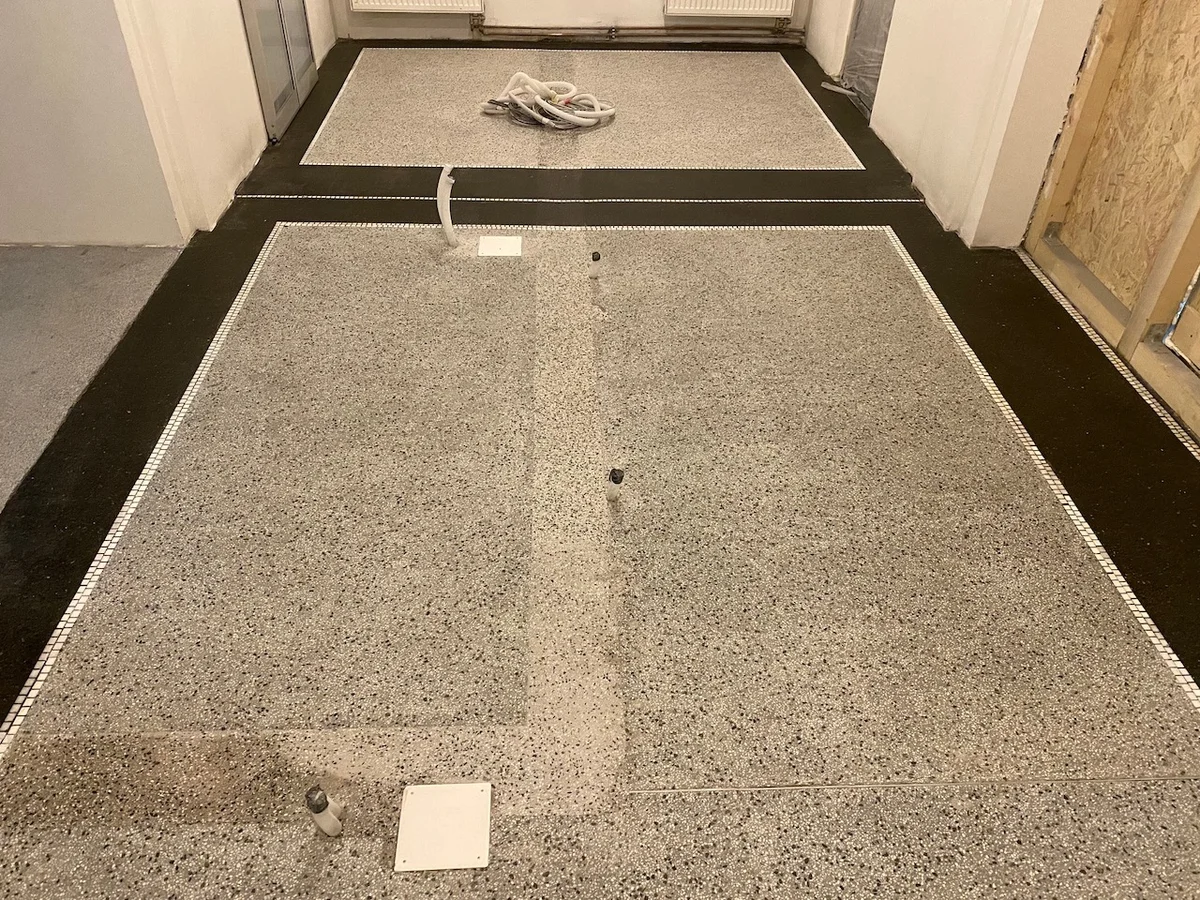
Poured terrazzo is a flooring system created by pouring a mix of cement (or epoxy resin) and ground aggregate (marble, granite, quartz, glass) directly onto a prepared substrate. Once it has hardened, the surface is ground, polished and, if required, sealed to create a smooth, durable and visually uniform poured floor.
Unlike the tile version, poured terrazzo is:
- seamless,
- monolithic,
- and can be shaped to follow any curve, pattern or zone.
The benefits of poured terrazzo
- A seamless, monolithic surface – hygienic, clean and elegant
- Extreme mechanical durability – it lasts decades, even under load
- It can be restored – poured terrazzo can be ground and polished again and again
- Design flexibility – a wide choice of colors, aggregates and textures
- Low maintenance – simple cleaning, with the option of sealing
- Suitable for underfloor heating – excellent heat retention
- A sustainable solution – natural materials, a long service life
How is poured terrazzo installed?
1. Consultation and design proposal
Establishing the requirements and choosing colors, aggregates and shapes. Proposing how the areas, decorative features and borders will be laid out.
2. Preparing the substrate
Strengthening, leveling and priming. Installing trim strips and divider strips where needed.
3. Pouring the mix
Applying the mix across the area at the required thickness. On larger areas, dividing it into sections (expansion zones).
4. Curing and drying
Usually 7–28 days depending on the type of binder (cement/epoxy). Checking the strength and readiness for grinding.
5. Grinding, polishing and sealing
Machine grinding of the top layer. Polishing to the required level (matte, satin, gloss). Sealing to protect the floor and accentuate its appearance.
Where is poured terrazzo used?
Poured terrazzo is a versatile material that, thanks to its durability, good looks and long service life, is used in a wide range of settings. It is found in public and commercial buildings as well as in private residences and historic properties.
- Schools, hospitals, government offices – heavily used floors where resistance to wear and easy maintenance matter
- Airports, railway stations, shopping centers – large areas with heavy traffic, where terrazzo delivers a long service life and a representative look
- Showrooms, galleries, museums – an elegant surface that underlines the look of a space while standing up to large numbers of visitors
- Restaurants, cafés, hotels – a combination of design and practicality, easy cleaning and resistance to spilled liquids and grease
- Entrance halls, living rooms – a modern or classic look that gives an interior its own character
- Kitchens, bathrooms, hallways – a hygienic, easy-to-maintain surface that resists moisture and staining
- Terraces, stairs, garages – a robust solution for areas exposed to mechanical loads and the weather
- Heritage-listed villas and houses – preserving the original appearance during restoration, with respect for the historic character of the building
- Renovations of old hallways, stairs and vestibules – restoring original features with an emphasis on durability and good looks
- Sensitive restoration of original floors with their original character – gentle methods that respect the historical value of the material while extending its service life
Design options for poured terrazzo
Poured terrazzo offers practically unlimited possibilities:
- the color of the cement binder – white, gray, black, pigmented
- the type and size of the aggregate – fine or coarse; marble, granite, glass
- inlaid patterns, lines and borders – using brass, copper or plastic strips
- combinations of zones and colors – creating a custom floor to an architectural design
The result is an original floor that adapts to the style of the building – from minimalist design to luxurious historic patterns.
Surface finish options for poured terrazzo
- Matte finish – a natural look, non-slip, modern
- Satin – elegant, accentuates the colors
- High gloss – a luxurious effect, suitable for representative spaces
- Bush-hammered finish – rough and anti-slip (mainly for exteriors)
Why choose us?
- We specialize in poured terrazzo – installation, restoration and repairs
- 15+ years of experience and dozens of projects across the Czech Republic
- Our own professional machinery
- An individual approach to every project
- Guidance on choosing colors, textures and design
- Fair prices and a quality guarantee
Frequently asked questions
What is poured terrazzo?
A monolithic mix of cement and aggregate with no joints, durable and flexible in design.
What are its benefits?
A long service life, high durability, easy maintenance and a wide range of looks.
Where is it used?
Public buildings, commercial spaces, private interiors and historic properties.
How is it maintained?
Ordinary cleaning is enough; sealing and the occasional restoration by grinding are recommended.
Restore your surface to perfection 🤩
Free initial consultation and a quote within 24 hours 🚀
We handle the restoration, grinding, cleaning and sealing of your floors and terrazzo with an emphasis on quality, detail and long service life.